.svg)
Blue Line Solutions
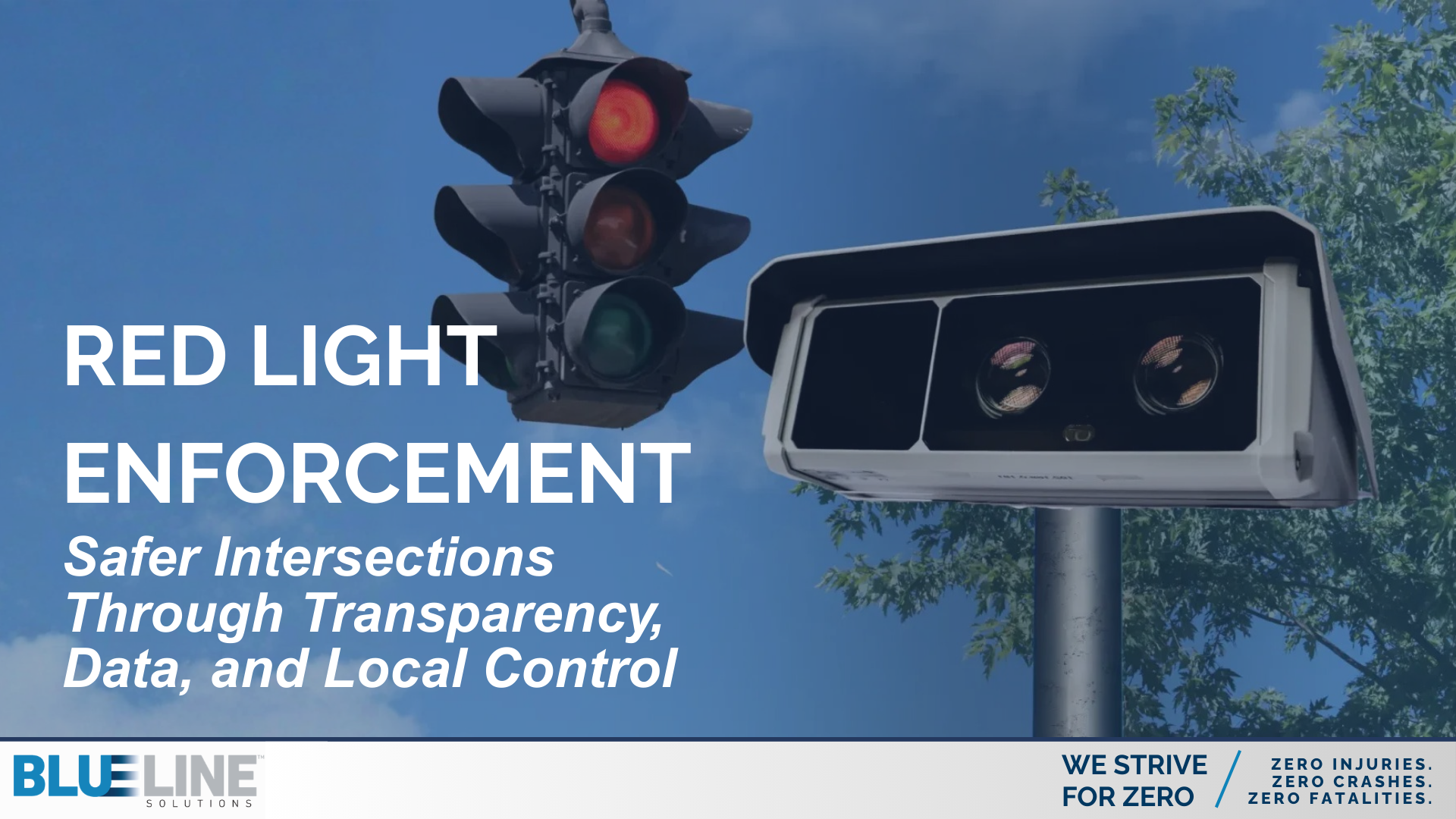
Red Light Enforcement: Safer Intersections Through Transparency, Data, and Local Control
Intersections are where speeds, distractions, and split-second decisions collide. Red Light Enforcement (RLE) helps communities reduce serious, preventable crashes by improving driver behavior at signalized intersections, especially where crash data shows a measurable safety problem. At Blue Line Solutions (BLS), we support agencies and local governments with a safety-first approach that prioritizes visibility, accountability, and results you can measure.
What is Red Light Enforcement
Red Light Enforcement uses camera-based technology at signalized intersections to document red light violations and support local enforcement decisions. The goal is straightforward: encourage safer driving behavior and reduce dangerous right-angle and turning crashes that can cause severe injuries and fatalities.
How RLE can save lives
Right-angle crashes (t-bone crashes) at intersections are some of the most severe because they can involve high-impact, side-entry collisions where vehicle occupants have less protection. Research has shown that red light cameras are associated with fewer fatal red-light-running crashes and fewer fatal crashes at signalized intersections overall.
RLE supports safety by:
- Deterring high-risk behavior at known problem intersections
- Creating consistent, predictable enforcement that encourages compliance
- Reducing the most dangerous crash types when deployed where data supports the need
A study of traffic at 19 intersections in 4 states run by the Univeristy Transportation Center for Alabama reported an average of 3.2 red light running events per hour per intersection . According to the Insurance Institute for Highway Safety (IIHS), RLE saved 159 lives in 2004-2008 in the 14 biggest U.S. cities with cameras, a February 2011 Institute analysis shows. Comparing these cities to those without cameras, researchers found the devices reduced the fatal red light running crash rate by 24 percent and the rate of all types of fatal crashes at signalized intersections by 17 percent. If cameras had been operating during that period in all cities with populations greater than 200,000, a total of 815 fewer people would have died.
“As someone who has responded to crash scenes, I understand how quickly a moment of inattention or impatience at a red light can change lives forever," recalls Mark Hutchinson, CEO of Blue Line Solutions. "Red Light Enforcement provides a consistent and fair way to reinforce compliance at high-risk intersections. It supports officers, strengthens community safety, and most importantly, helps prevent the injuries and fatalities that no family should have to endure.”
Where RLE can be implemented
RLE is best suited for intersections where communities have documented safety concerns such as:
- High rates of red light related crashes or near-misses
- Injury-producing right-angle crashes
- Problem corridors feeding into downtown areas, school routes, or pedestrian-heavy districts
- Locations where engineering changes alone are not reducing risk quickly enough
The strongest programs are targeted, data-driven, and paired with clear public communication, so drivers understand what is changing, where, and why.
How RLE supports Vision Zero
Vision Zero is about preventing serious injuries and fatalities, not reacting after tragedy. RLE aligns with Vision Zero by focusing on proven crash-risk locations and applying consistent behavior-change tools where they can have meaningful impact. IIHS has reported substantial safety benefits associated with red light camera programs, including measurable reductions in fatal crashes at signalized intersections.
How Blue Line Solutions helps communities do RLE the right way
BLS approaches automated safety with the same principles you emphasize as decision makers: transparency, fairness, and local control.
With BLS, communities get:
- Community-first program design that starts with data and focuses on true safety needs
- Visibility and communication support so the public understands the intent: slower, safer driving and fewer serious crashes
- Operational support and reporting to help agencies track outcomes and share results with leadership and residents
- Agency authority maintained: your jurisdiction sets policy and retains decision-making control, while BLS supports the program execution
Making a Difference in Your Community
If your community is seeing preventable intersection crashes, RLE can be a practical, measurable step toward safer streets. If you want to evaluate where red light violations and intersection crashes are creating the greatest risk, connect with Blue Line Solutions to discuss a data-driven path forward and how RLE fits into your broader Vision Zero strategy. Connect with us at www.bluelinesolutions.com/contact.
Ready to streamline your compliance process?
Our team can help you find the right tools for your city, district, or agency—and walk you through exactly how it all works.
Related